
Paralytic Care Services at Home

Are you searching for reliable, high-quality Paralytic Care Services in the comfort of your own home? We understand the challenges that come with paralysis, and we’re here to help you or your loved one receive the right support without leaving home. Our goal is to make daily life more manageable, empowering individuals to live with dignity, independence, and confidence. We offer affordable, personalized care plans designed to meet your specific needs—whether short-term or long-term. With our team of skilled and compassionate healthcare professionals, you can expect consistent, respectful, and expert-level care right at your doorstep.
Paralysis is a medical condition that results in the loss of muscle function in one or more parts of the body. It occurs when there is damage to the central nervous system (such as the brain or spinal cord) or the peripheral nervous system (nerves outside the brain and spinal cord). This damage interrupts the signals between the brain and muscles, leading to impaired movement.
Monoplegia: affects only one limb, such as an arm or leg.
Hemiplegia: affects one side of the body, including the face, arm, and leg.
Diplegia: affects both legs but spares the arms.
Paralysis is a medical condition that results in the loss of muscle function in one or more parts of the body. It occurs when there is damage to the central nervous system (such as the brain or spinal cord) or the peripheral nervous system (nerves outside the brain and spinal cord). This damage interrupts the signals between the brain and muscles, leading to impaired movement.
Paraplegia: affects both legs and the lower part of the body, including the torso and pelvis.
Quadriplegia or Tetraplegia: affects all four limbs, as well as the torso and the pelvic region.
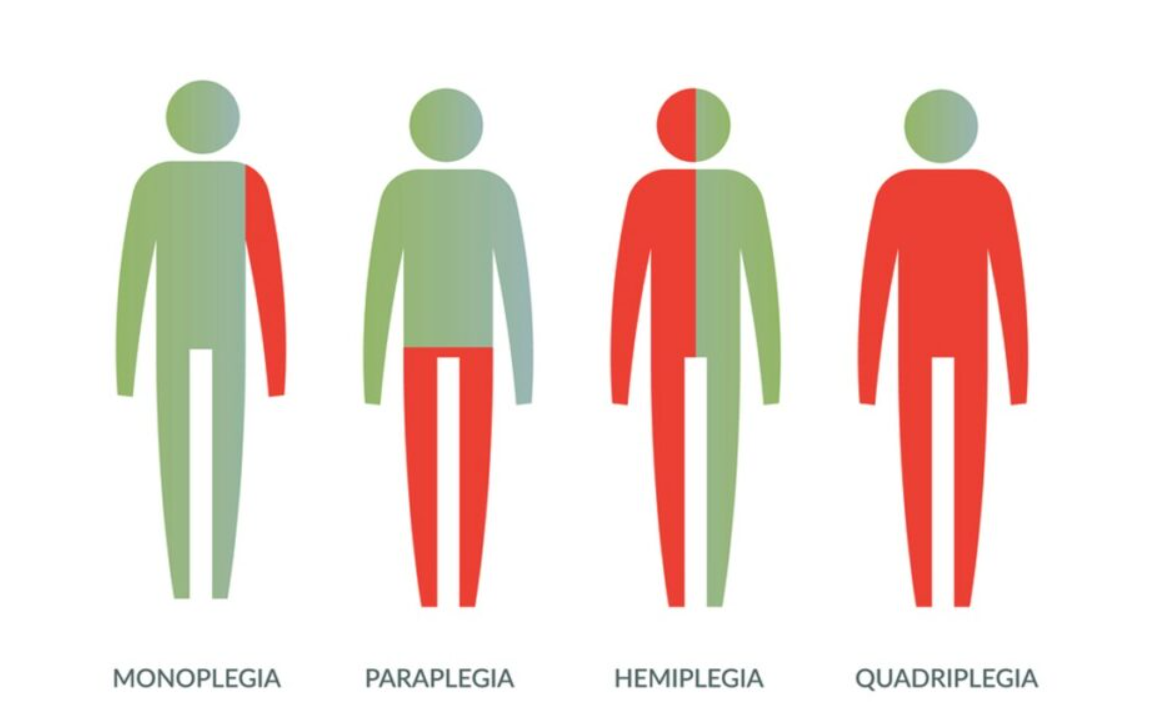
Paralysis is a condition marked by the loss of muscle function in one or more parts of the body. It typically results from an interruption in the communication between the brain and muscles due to damage to the nervous system. The severity and type of paralysis can vary depending on the location and extent of the damage.
Common Causes of Paralysis:
Treatment and Management:
The treatment approach for paralysis depends on its cause and severity. While full recovery may not always be possible, various therapies and tools can greatly improve mobility and daily functioning.
Home-Based Care and Remedies:
In addition to medical treatments, some home-based approaches can help alleviate symptoms and improve comfort:
Living with Paralysis:
Although living with paralysis presents challenges, many individuals lead fulfilling and independent lives with the right support system. Rehabilitation programs, support groups, and assistive technologies play a vital role in helping individuals regain confidence, participate in daily activities, and enhance their quality of life. With compassionate care, adaptive strategies, and a positive outlook, people living with paralysis can overcome obstacles and thrive.